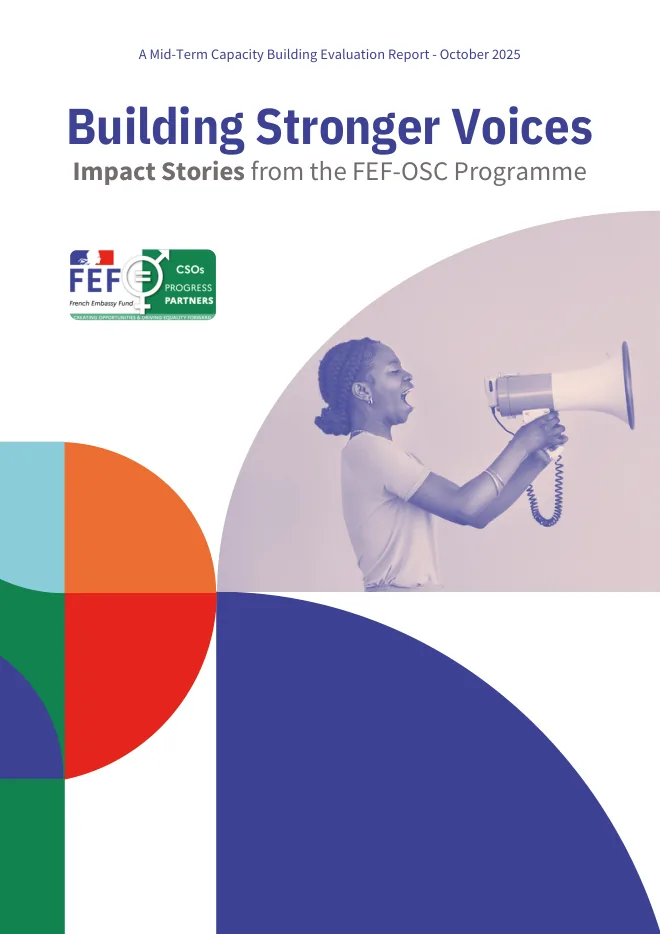
Building Stronger Voices
Mid-term evaluation combining organisational stories, knowledge-application results, charts and coaching reflections. My contribution: final review, visual layout, design and formatting.
Contributing to a learning-driven institutional strengthening programme, and translating its evidence into clear, accessible reports and visual knowledge products.
CASE STUDY / 2025–2026Civil society organisations make a vital contribution to gender equality, women’s empowerment and social inclusion. Their long-term effectiveness also depends on clear governance, reliable systems, the ability to communicate evidence and opportunities to learn from one another.
Implemented by the Cognito-POD Consortium with support from the French Embassy Fund for Civil Society Organisations (FEF-OSC), this programme brought together institutional assessment, collaborative learning, webinars, workshops, coaching and peer exchange across Nigeria.
It was designed as a sustained learning journey, connecting organisational challenges with practical tools and structured opportunities to apply new knowledge.
My work crossed facilitation, knowledge translation and the editorial and visual production of the programme’s evidence products.
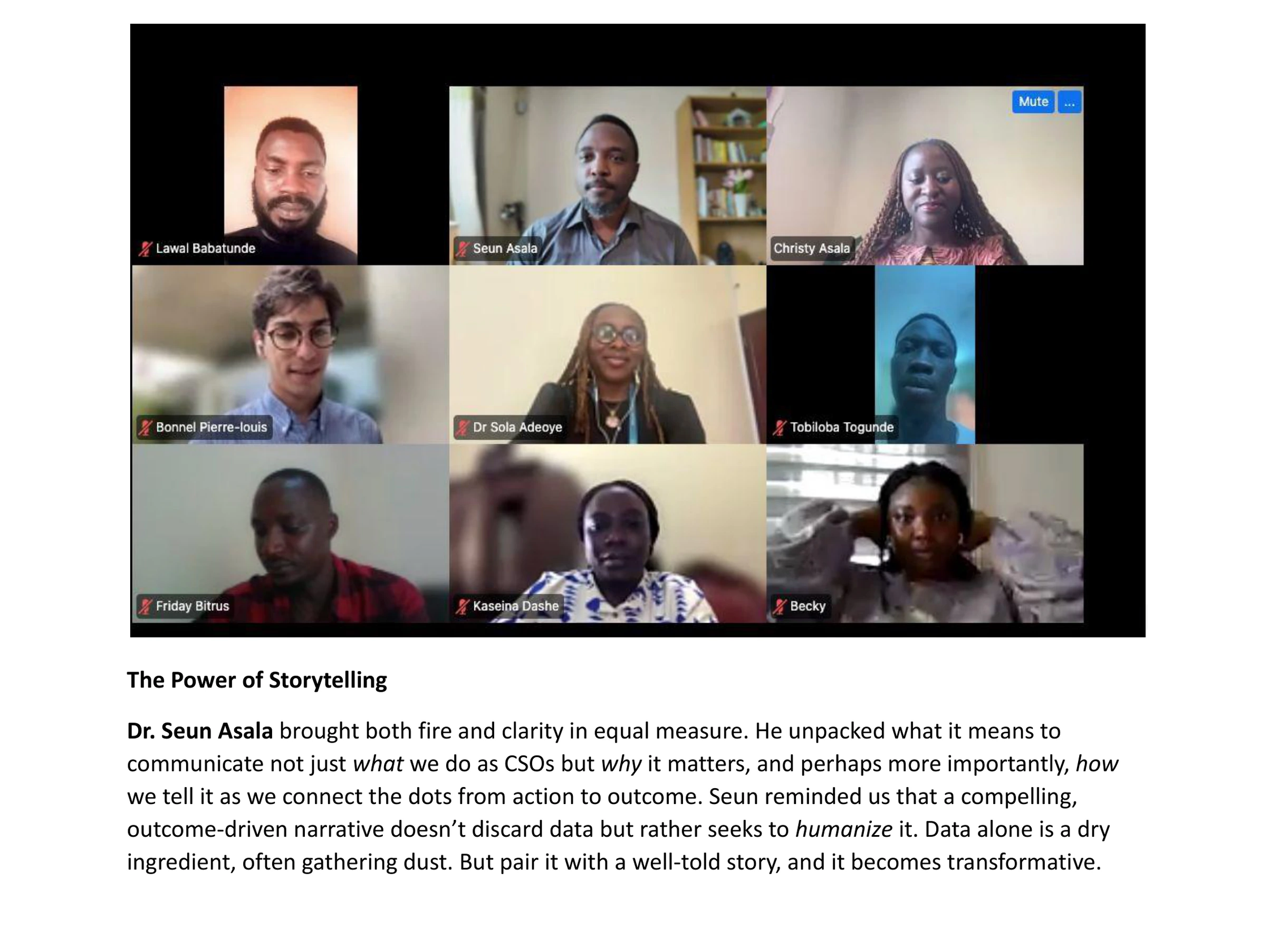
I facilitated the programme’s second webinar, focusing on how organisations can communicate outcomes with evidence, human-centred narratives and attention to audience, consent, dignity and ethical storytelling. The session connected communication with advocacy, partner engagement and more deliberate organisational visibility.
I contributed final review, layout, design and formatting for the midterm and endline evaluation reports. For the end-of-project report, I additionally supported final proofreading and layout optimisation, completed the visual design, and developed infographics explaining the programme’s methods, results and learning.
The reports document emerging institutional changes, final assessment findings and implementation lessons. Final editorial and visual contributions described below were mine; the research, analysis and report preparation were collaborative.
Mid-term evaluation combining organisational stories, knowledge-application results, charts and coaching reflections. My contribution: final review, visual layout, design and formatting.
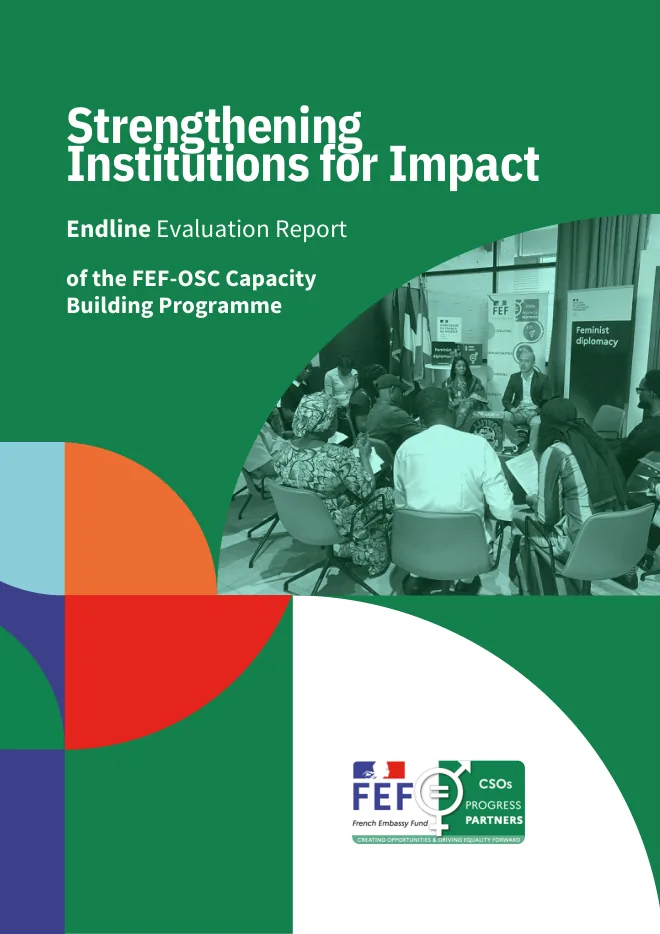
Final capacity assessment across twelve domains, combining self-assessment scores with structured qualitative reflection. My contribution: final review, visual layout, design and formatting.
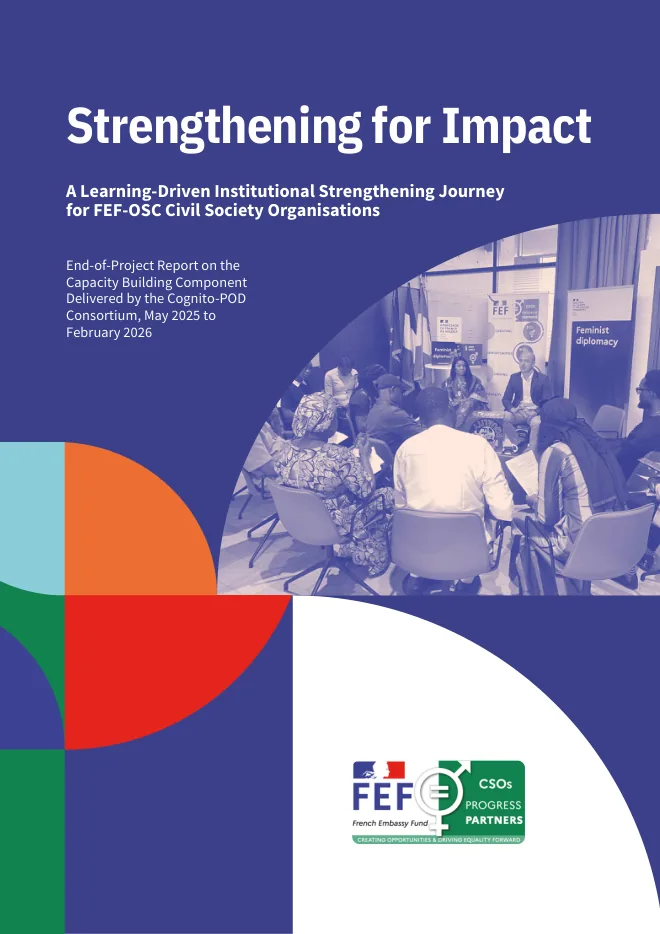
End-of-project narrative on implementation, activities, programme learning and implications. My contribution: final review, proofreading, visual-design optimisation, complete final design and infographics.
Selected visuals from the actual publications. Their different report colours are preserved within the neutral Espresso & Copper website treatment.
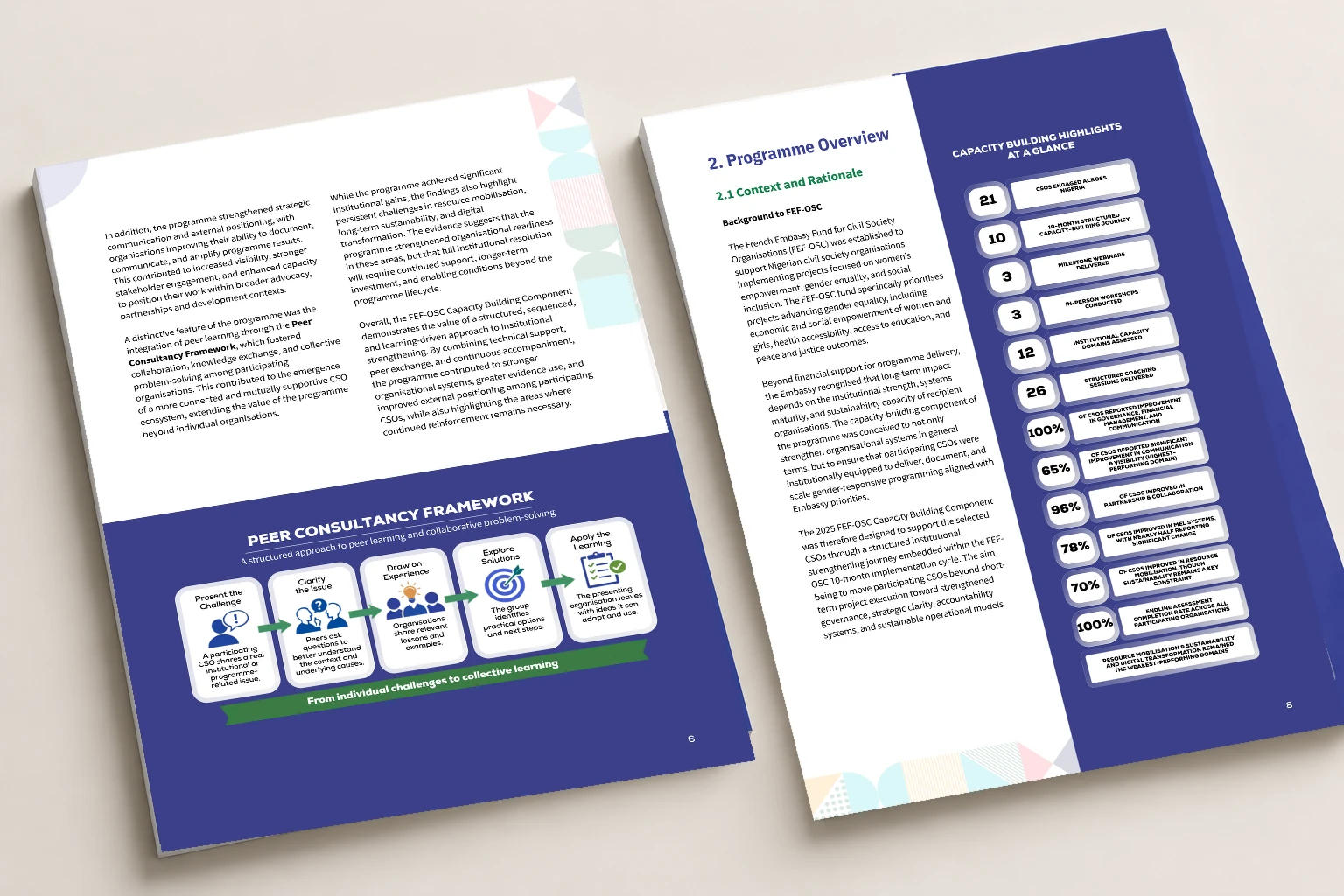
The programme combined practical learning experiences with structured reflection and reporting.
Results are programme-level findings from participating organisations, not outcomes attributable to one contributor. Endline data is based substantially on organisational self-assessment, triangulated with reflections.
Midterm reported application of learning.
Participating organisations reporting adoption of at least one new tool or system.Internal learning shared at midterm.
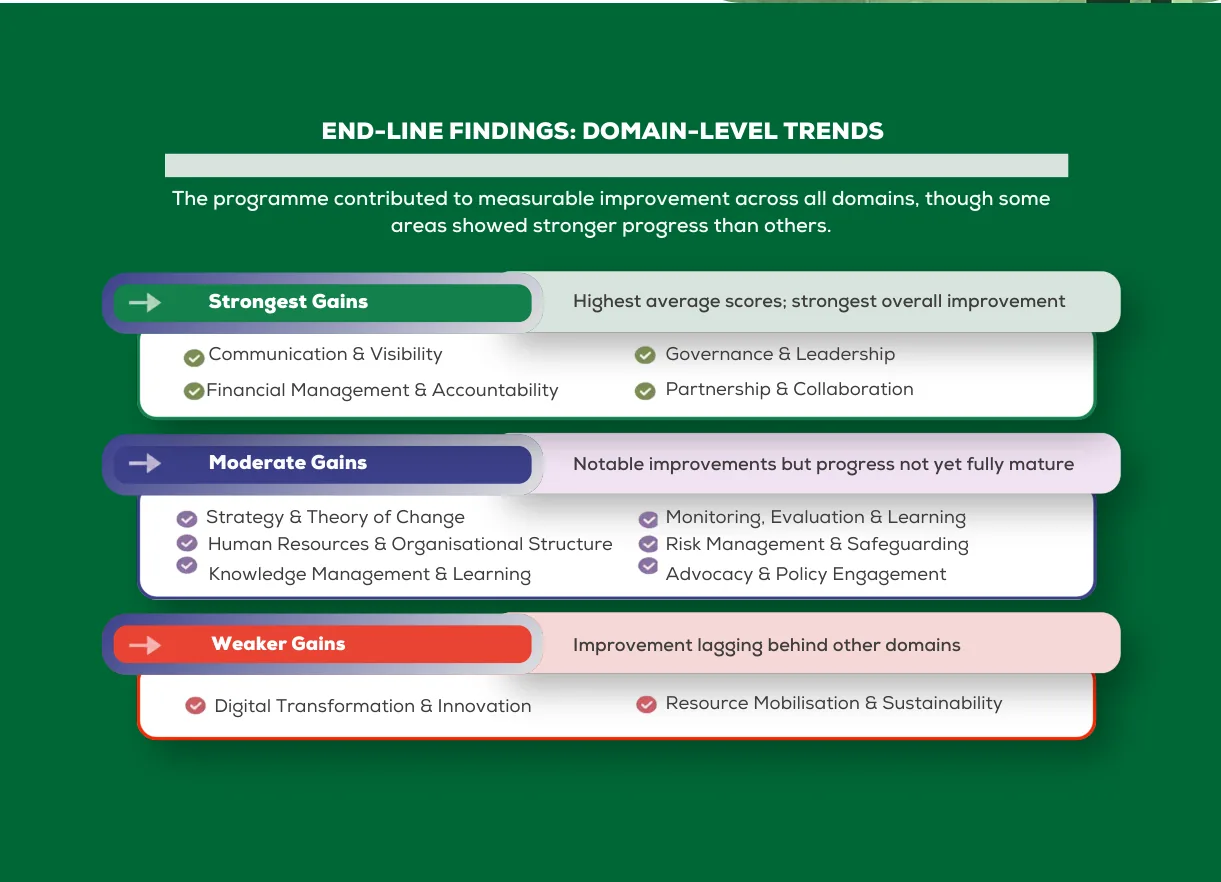
All participating organisations reported internal step-down dissemination.Endline Communication & Visibility average score.
Highest-scoring of the twelve capacity domains in the endline self-assessment.The evaluations found progress across the cohort, alongside continuing constraints in digital transformation and resource mobilisation. Baseline percentages, midterm application figures and endline ordinal scores are different measures and should not be interpreted as identical pre/post comparisons.
Evidence becomes more useful when people can understand it, share it and put it into practice.
The programme was delivered by The Cognito Project and POD Consulting (Cognito-POD Consortium) under the French Embassy Fund for Civil Society Organisations. It drew on the work and perspectives of participating CSOs, facilitators, technical contributors and institutional partners.
For the Endline Evaluation and End-of-Project reports, the source documents credit Andrew Ochu-Baiye for report preparation, the Cognito-POD Team for technical review and Helen Adesola for data and documentation support. My contributions to final review, proofreading where applicable, report visual design, formatting and infographics formed part of this shared work.
Programme findings, photographs and document samples are presented in the context of the approved portfolio showcase. Individual contributions and collective results are identified separately.
← Explore other projects